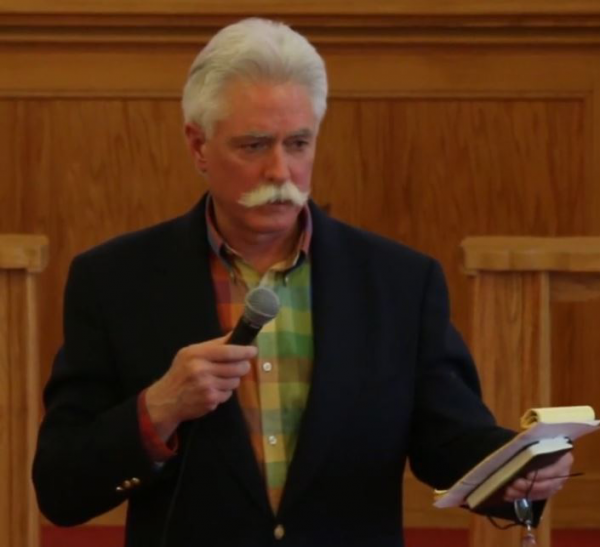






Common law is not a list of laws but a way of life and mind, recognizing that man at his best is still only man—at best. Accordingly, it seeks not the scholastic's utopian fantasy through a code of legal precision but rather the doable-ness of fair play by following due process to uncover the driving reality of facts. —Brent Allan Winters
The civil law (law of the city) seeks foremost to justify the will of the powerful party, set forth in commands called legislation and regulation. By contrast, our common law (law of the land) seeks foremost to protect lawful relationships through due process, also called fair play. —Brent Allan Winters
Civil law protects foremost the more-powerful party; common law protects foremost relationships. A glance at the spines of a set of civil-law code and regulation volumes spells out this difference. Civil law's codes are organized according to subject—contract law, tort law, property law, family law & etc.
By contrast, a our common law is understood according to relationships—creditor-debtor, promisor-promisee, trustor-trustee, bailor-bailee, vendor-vendee, husband-wife & etc. Accordingly in common-law trials, the threshold question must be to identify the relationship between the parties: landowner-trespasser, landowner-invitee, leaseholder-landlord, dual agency (partnership) or single agency, bailor-bailee, trustee-beneficiary & etc.
Once this question of fact (relationship) is discerned, the law to be applied is clear and all the Jury need to decide are the remaining facts of the case: What happened? How'd it happen? Why'd it happen? When'd it happen? Where'd it happen? Who done it? Who's at fault? —Brent Allan Winters
That the quest for facts is the driving force of our common law that distinguishes it from the rest of the world's city (civil) law and cannot be over-stressed. In a common-law country such as ours, the troublesome problem confronting the court and jury, says Stryker, is not so much what the law is, as what happened. Did he steal? Did he assault? Did he commit arson? Did he kill, and under what circumstances? —Brent Allan Winters
The purpose of this site is to teach the first principles of freedom—found in the unwritten laws of Nature (our common law) and the written laws of Nature's God (Scripture)—by gathering and spreading the observations and works of common lawyer Brent Allan Winters.
Brent Allan Winters neither owns nor maintains this website